Table of contents
- What is crypto leveraged trading?
- How to access leveraged trading on bitcoin.com.au
- What is the maximum leverage on bitcoin.com.au?
- Understanding the risks of leveraged trading
- How market volatility affects leveraged trading
- How stop loss orders work during volatile markets
- Understanding contributed margin and risk
- What is a margin call?
- What to do if you receive a margin call?
- What is mandatory liquidation?
- What does margin mean in leveraged trading?
- What is a leveraged buy and a leveraged sell?
- How do I add additional margin to a position?
- How is initial collateral contributed for new positions?
- How do I pay back the advanced funds?
- What can be offered as collateral?
- Fees for leveraged trading
Main takeaways
- Leveraged trading allows you to open larger positions using advanced funds, increasing both potential gains and losses
- Losses can occur quickly, and you can lose all of your collateral if the market moves against you
- A margin call is a warning that your position is at risk and may require action
- If losses continue, your position may be automatically closed (mandatory liquidation)
What is crypto leveraged trading?
Cryptocurrency leveraged trading allows you to increase your market exposure by trading with funds advanced to you. Instead of trading only with your own funds, leverage allows you to open larger positions than your account balance would normally allow.
This means you can amplify potential gains if the market moves in your favour. However, leverage also increases potential losses if the market moves against you.
Because of this, leveraged trading carries a higher level of risk and is generally suited to experienced traders who understand how to manage that risk. To use leveraged trading on bitcoin.com.au, you must maintain sufficient collateral in your account. Collateral refers to the funds used to support your leveraged positions and absorb any losses.
This article explains how leveraged trading works, including key concepts such as margin, margin calls, and liquidation, so you can better understand the risks involved.
Key Takeaway:
Leverage increases both potential gains and losses. Understanding how it works is essential before trading.
How to access leveraged trading on bitcoin.com.au
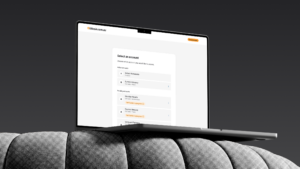
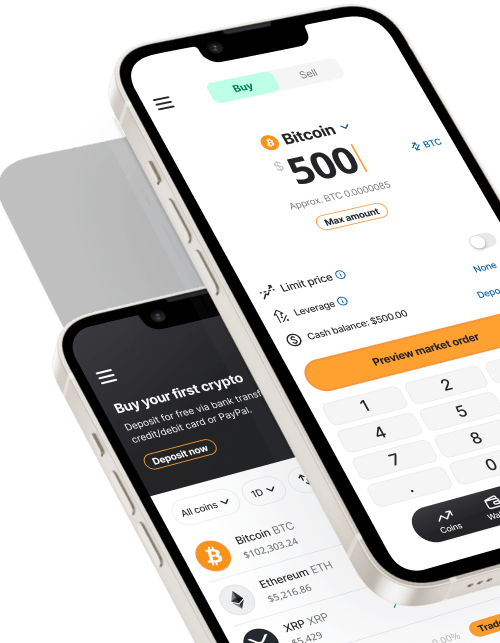
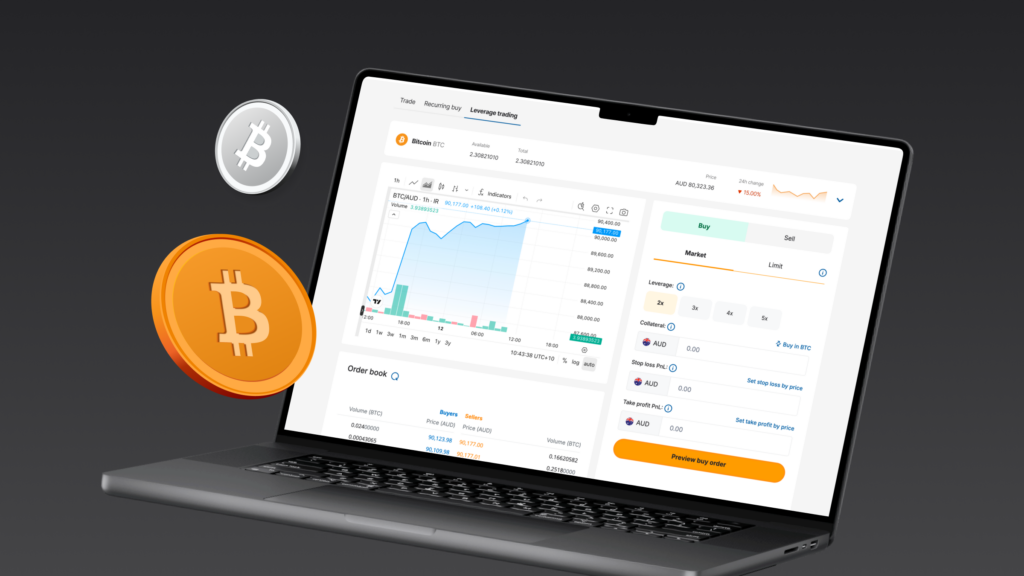
Qualified customers can access leveraged trading from the Leveraged Trading tab on the Trade screen on the bitcoin.com.au web portal.
How can I qualify to access leveraged trading on bitcoin.com.au?
Before you can begin leveraged trading on bitcoin.com.au, you must first pass a suitability test to determine whether the product is appropriate for you.
The information on this page, together with the leveraged trading terms and conditions, provides an overview of how leveraged trading works and the risks involved.
As part of the suitability test, you will be asked to complete a random multiple-choice test based on the information provided here. You must achieve a minimum score of 80% before leveraged trading can be enabled on your account.
We recommend reading the information carefully before taking the assessment.
If you do not pass the assessment, you can review the information on this page and try again.
What is the maximum leverage on bitcoin.com.au?
The maximum leverage available when opening a new leveraged position on bitcoin.com.au is 5x.
This means you can open a position up to 5 times the value of your collateral. For every $1 you provide, bitcoin.com.au can advance an additional $4. Collateral is the funds in your account used to maintain your leveraged position and cover potential losses.
Using higher leverage increases both potential gains and potential losses, and at 5x leverage, losses can occur more quickly if the market moves against your position.
Understanding the risks of leveraged trading
Leveraged trading increases both potential gains and potential losses. If the market moves in your favour, your profits can be higher. If the market moves against you, your losses can also be larger.
Because leveraged trading uses advanced funds, losses can occur more quickly than when trading without leverage. This means your collateral can be reduced rapidly if the market moves against you.
For this reason, leveraged trading carries a higher level of risk and may not be suitable for all traders.
The level of leverage you use affects how quickly your position changes in value. For example, at 2x leverage, a 10% market move results in approximately a 20% change in your position. At 5x leverage, the same 10% move results in approximately a 50% change.
Key Takeaway:
You can lose all of your collateral when trading with leverage, especially at higher leverage levels.
How market volatility affects leveraged trading?
Cryptocurrency markets can move quickly, sometimes within minutes. When trading with leverage, these price movements can increase the risk of losses.
In volatile markets, your position can change in value rapidly. If the market moves against you, your collateral can be reduced quickly, increasing the risk of a margin call or liquidation. Because of this, leveraged positions are more sensitive to sudden price movements, especially at higher leverage levels.
Key Takeaway:
In highly volatile market conditions, you can lose all of the collateral supporting your leveraged position.
How stop loss orders work during volatile markets
A stop loss allows you to automatically close your leveraged position if the market moves against you. You can set a stop loss based on a specific price or a loss amount, and when this level is reached, your position will be closed at the best available market price.
However, a stop loss does not guarantee your position will close at the exact price you set. In fast-moving or volatile markets, prices can change quickly, and your position may be closed at a worse price than expected.
This means a stop loss helps manage risk, but it does not remove the risk of losses, especially during periods of high market volatility.
Key Takeaway:
In volatile markets, a stop loss may not execute at your set price and losses may be larger than expected.
- For leveraged buy positions, it may execute below the trigger price.
- For leveraged sell positions, it may execute above the trigger price.
Understanding contributed margin and risk in leveraged trading
Contributed margin is the amount of fiat (AUD) or crypto that you contribute in order to open a new leveraged position. Once a position is open, you can contribute additional margin in either fiat or cryptocurrency to maintain it. The contributed margin is used to cover any potential losses that may occur as a result of your leverage position.
While the contributed margin is used to cover any potential losses, and your position is automatically liquidated when it falls below 10% margin, in instances of extreme market volatility, there is a possibility of losing not only the contributed margin but also incurring additional losses.
Key Takeaway:
In extreme market conditions, you could lose all of your contributed margin and may incur additional losses.
Key concepts
- Collateral (or contributed margin) is the funds used to cover potential losses
- Margin percentage tells how close your position is to being liquidated
- A margin call (15%) is a warning that your position is at risk
- Mandatory liquidation (10%) means your position is automatically closed
What is a margin call?
A margin call is a notification that your leveraged position requires additional funds to remain open. This happens when losses reduce the funds supporting your position below the required level.
On bitcoin.com.au, a margin call is triggered when your margin percentage (your collateral relative to your total position size) falls below 15%, indicating your position is at increased risk.
If losses continue and your margin percentage falls further to 10%, your position may be automatically liquidated to limit further losses.
Key Takeaway:
A margin call occurs when your margin percentage falls below 15%. If it drops to 10%, your position may be liquidated.
What to do if you receive a margin call?
If you receive a margin call, it means your position is at increased risk and requires immediate attention.
You can take the following actions:
- Add more collateral to increase the funds supporting your position
- Reduce or close your position to lower your exposure
If no action is taken and the market continues to move against your position, it may reach mandatory liquidation.
Key Takeaway:
If you do not act on a margin call, your position may be automatically liquidated.
What is mandatory liquidation?
Mandatory liquidation is when your leveraged position is automatically closed because your margin percentage has fallen too low.
On bitcoin.com.au, this occurs when your margin percentage falls below 10%.
If this level is reached, your position may be partially or fully closed at the best available market price to repay the advanced funds and limit further losses. This process happens automatically and does not require your permission.
Key Takeaway:
If your margin percentage falls below 10%, your position may be automatically liquidated.
What does margin mean in leveraged trading?
Margin refers to the funds supporting your leveraged position. Your margin percentage compares your collateral to the total size of your position.
A higher margin percentage means your position is further from liquidation, while a lower margin percentage means it is closer to liquidation.
If the market moves against your position, your margin percentage will decrease. If it falls too low, your position may receive a margin call or be automatically liquidated.
What is a leveraged buy and a leveraged sell?
A leveraged position can be either a buy or a sell.
A leveraged buy is used when you expect the price to rise. It will typically make a profit if the market rises and a loss if the market falls.
A leveraged sell is used when you expect the price to fall. It will typically make a profit if the market falls and a loss if the market rises.
Examples of a leveraged buy
Let’s look at examples of a leveraged buy position where the price moves by 10%.
At 2x leverage, if the price rises by 10%, your margin percentage will increase. If the price falls by 10%, your margin percentage will decrease.
At 5x leverage, the impact is greater. If the price falls by 10%, your margin percentage may drop close to margin call levels. If the price rises by 10%, your margin percentage will increase more significantly.
Examples of a leveraged sell
The same principles apply to leveraged sell positions.
At 2x leverage, if the price falls by 10%, your margin percentage will increase. If the price rises by 10%, your margin percentage will decrease.
At 5x leverage, the impact is greater. If the price rises by 10%, your margin percentage may drop close to margin call levels. If the price falls by 10%, your margin percentage will increase by a greater amount.
How do I add additional margin to a position?
You can add additional margin by allocating funds from your account to an open leveraged position. Adding margin increases the funds supporting your position and may reduce the risk of liquidation.
Additional margin can be added to your position using fiat or cryptocurrency. For example, for an AUD/BTC position, you can add either AUD or BTC as additional margin.
How is initial collateral contributed for new positions?
When you open a new leveraged position, the required collateral is automatically reserved from your available balance.
You must have enough funds in your account to cover the required collateral before opening a position. This applies to both leveraged buy and leveraged sell positions. You can use AUD or cryptocurrency as collateral.
For example, if you open a $10,000 position at 5x leverage, $2,000 worth of collateral will be reserved from your account.
This collateral is used to support your position and cover potential losses.
Note: While initial collateral for new positions must be in fiat, you can contribute additional collateral in either fiat or cryptocurrency to your existing open positions. See “How do I contribute additional margin?” for more details.
How do I pay back the advanced funds for my position?
There are three ways your leveraged position can be closed and the advanced funds repaid:
- Close your position manually
When you close your position, the advanced funds are automatically repaid. - Mandatory liquidation
If your position is liquidated, the proceeds are used to repay the advanced funds. - Repay the loan directly
If you have enough of the advanced asset, you can repay it directly to close the position.
What can be offered as collateral?
When opening a new leveraged position, you can use AUD or cryptocurrency as collateral. You must have sufficient funds in your account to cover the required amount.
Once a position is open, you can add additional collateral using either AUD or cryptocurrency. If you add cryptocurrency, it must match the trading pair of your position.
For example, for an AUD/BTC position, you can add AUD or BTC as collateral. You cannot use unrelated assets such as ETH.
Key Takeaway:
Initial collateral must be in fiat (AUD). After opening a position, you can add AUD or a matching cryptocurrency as additional collateral.
Fees for leveraged trading?
The following fees apply to leveraged trading on bitcoin.com.au.
Standard trading fees apply when opening and closing leveraged positions. Standard trading fees also apply if your position is liquidated.
A daily interest fee applies to the borrowed funds while your position remains open. For leveraged buy positions, this is 0.05% per day (from 28 Sep 2026). For trades made prior to 28 Sep 2026, the interest rate is 0.1% per day. For leveraged sell positions, this is 0.03% per day.
If your position reaches mandatory liquidation, an additional 1% liquidation fee is charged on the borrowed portion of the position.
Summary
Leveraged trading allows you to increase your market exposure, but it also increases risk.
Your collateral (or contributed margin) is used to cover losses, and your margin percentage determines how close your position is to liquidation. If your margin falls below 15%, you will receive a margin call. If it falls below 10%, your position may be automatically liquidated.
Higher leverage increases the speed at which gains and losses occur. In volatile markets, losses can happen quickly, and it is possible to lose all of your collateral.
Understanding these concepts is essential before trading with leverage.
Ready to take the assessment?
Log in to your bitcoin.com.au account and go to the Leveraged Trading tab to begin your suitability assessment.